Sonography Course in Sakaka
Build focused knowledge in diagnostic ultrasound with a structured sonography course in Sakaka designed for medical professionals seeking to strengthen their understanding of ultrasound principles, image interpretation, scanning protocols, and clinical applications.
Ultrasound is an important diagnostic modality across multiple medical specialties. From abdominal and pelvic examinations to obstetric, gynaecological, and basic emergency imaging applications, sonography supports timely clinical assessment and informed decision-making. A well-designed ultrasonography training programme can help learners develop a clearer, more systematic approach to performing and interpreting ultrasound examinations within their professional scope and applicable regulations.
Our sonography training options are structured to support eligible doctors and healthcare professionals looking for flexible learning through online, offline, and practical training formats.
Ultrasound Training Designed for Clinical Learning
The programme is focused on helping learners understand both the theoretical and practical foundations of ultrasonography. Training may include essential concepts such as ultrasound physics, probe selection, image optimisation, normal anatomy, common imaging findings, documentation, and clinical correlation.
Course content is presented in a clear, learner-focused format to help participants connect ultrasound concepts with real-world clinical scenarios. Whether you are looking to refresh your existing knowledge or pursue focused training in a particular area of ultrasound, the course can support your professional learning journey.
Key Learning Areas
Depending on the selected programme, ultrasound training may cover:
Online and Offline Sonography Course Options
Every learner has different professional commitments and learning preferences. That is why sonography courses may be available in flexible learning formats, including online academic sessions, classroom-based training, and practical exposure opportunities.
Online Sonography Training
Online ultrasound training is suitable for professionals who need greater flexibility while continuing their clinical practice or other responsibilities. Digital sessions can support learning through lectures, image discussions, recorded content, case-based teaching, and assessments.
Online learning can be especially helpful for building a strong conceptual foundation in areas such as:
Offline and Practical Ultrasound Training
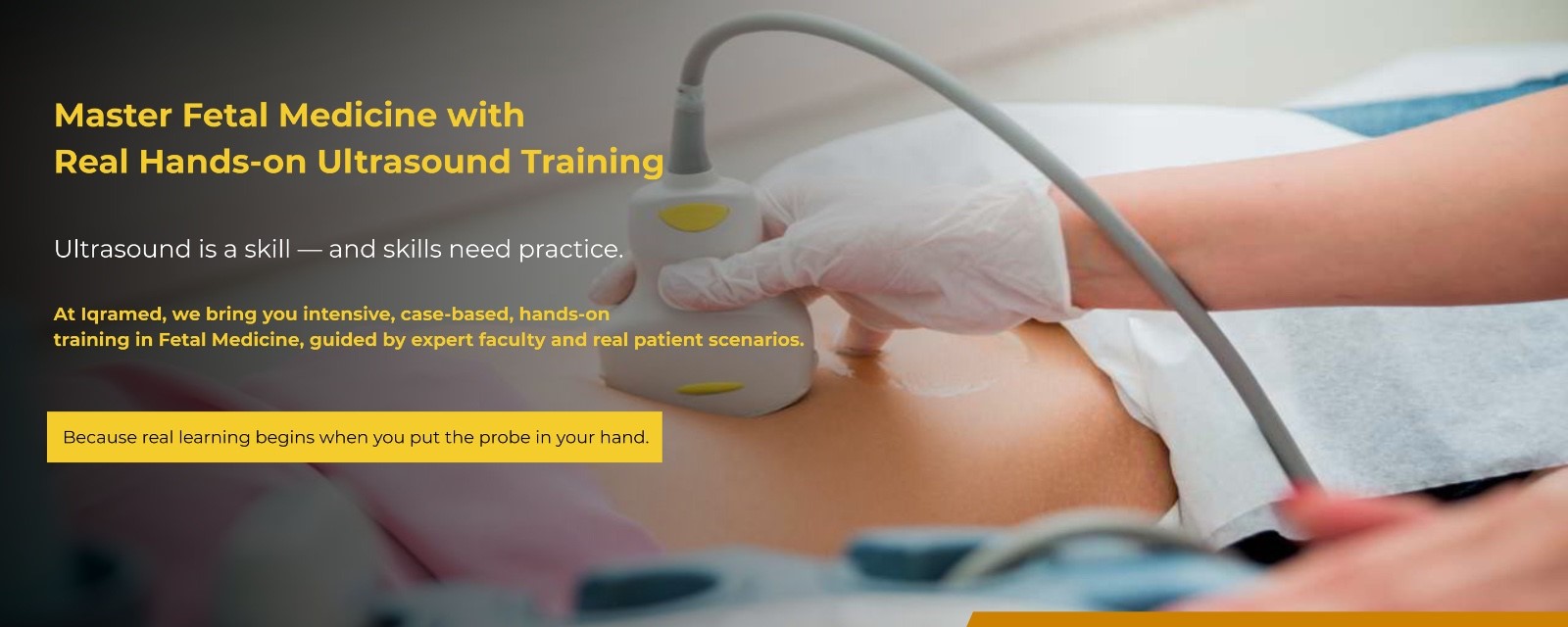
Practical learning is valuable for understanding probe movement, patient positioning, image optimisation, and scanning workflow. Offline sessions and supervised practical exposure can help learners develop familiarity with ultrasound equipment and examination techniques.
Hands on training is most effective when approached as a structured, supervised component of broader clinical learning. Participants should always practise within their professional eligibility, institutional protocols, and applicable legal requirements.
Short-Term and Extended Ultrasound Courses
Learners may choose a training duration based on their experience, availability, and area of interest. Course options can include short-term modules as well as longer-duration programmes.
Common course durations may include:
A short-term course can be useful for focused skill development, while an extended programme may offer more time for detailed study, case discussions, revision, and supervised learning exposure.
Abdominal Ultrasound Course
Abdominal sonography is a key component of diagnostic ultrasound practice. An abdominal ultrasound course can help learners understand standard scan protocols, normal organ appearances, and commonly encountered findings involving the liver, gallbladder, biliary system, kidneys, urinary bladder, pancreas, spleen, and other abdominal structures.
Topics may include:
The aim is to build a methodical approach so that learners can understand how to obtain relevant views and recognise when findings need further clinical evaluation.
Gynecology and Obstetrics Ultrasound Training
Gynecology and obstetrics ultrasound are important areas for clinicians working in women’s health. Training in this area can introduce learners to pelvic anatomy, basic obstetric scan concepts, common gynaecological imaging findings, and the role of ultrasound in clinical assessment.
Relevant learning areas may include:
These modules are intended to support medical learning and should be undertaken only by professionals who meet the relevant eligibility and regulatory requirements.
Ultrasound Course for Doctors and Medical Professionals
Ultrasound education can be relevant to doctors working in a range of clinical settings. Depending on professional background and course eligibility, training may be useful for practitioners who want to improve their understanding of diagnostic imaging and ultrasound-guided clinical assessment.
The course may be of interest to eligible:
Before enrolling, candidates should verify eligibility criteria, programme details, clinical training arrangements, and the regulations applicable to ultrasound practice in their state or institution.
Why Choose a Structured Ultrasonography Course?
A structured learning pathway can help reduce the uncertainty that often comes with self-directed study. Instead of relying only on scattered resources, learners can follow organised modules that progress from basic principles to focused clinical applications.
Benefits of Structured Sonography Training
Sonography is a skill that develops through continuous learning, responsible practice, and appropriate supervision. A course can provide the academic and practical foundation, while ongoing clinical experience helps refine professional competence over time.
Start Your Ultrasound Learning Journey
If you are looking for a sonography course in Sakaka, explore training options that align with your professional goals, eligibility, learning schedule, and clinical area of interest. Whether your focus is abdominal ultrasound, gynecology, obstetrics, radiology, or general diagnostic imaging, a structured course can help you take the next step in your ultrasound education.
Contact the institute to learn more about available course formats, duration, admission requirements, schedules, and practical training opportunities.
Frequently Asked Questions
1. Who can enrol in a sonography course in Sakaka?
Eligibility depends on the specific programme and its admission policies. Sonography training is generally intended for appropriately qualified medical and healthcare professionals, such as doctors and professionals working in relevant imaging or clinical fields. Candidates should confirm eligibility directly with the institute before applying.
2. Is an online sonography course available in Sakaka?
Yes, online sonography training may be available for theory-focused learning. Online formats can include lectures, image-based discussions, clinical case reviews, recorded sessions, and assessments. Practical scanning skills generally require supervised, hands-on learning in an appropriate setting.
3. Does an online ultrasound course include practical training?
This depends on the programme. Some courses offer separate practical sessions, workshops, demonstrations, or supervised clinical exposure. Candidates should ask for clear details about the practical training format, duration, location, and supervision before enrolling.
4. What is covered in an ultrasonography course?
Course content may include ultrasound physics, instrumentation, probe handling, scan orientation, normal anatomy, image optimisation, abdominal ultrasound, pelvic imaging, obstetric and gynecology ultrasound concepts, Doppler basics, common pathologies, and clinical case discussions.
5. How long is a sonography course?
Course duration can vary. Options may include short-term programmes of around 3 months or 6 months, as well as longer courses that run for one year. The right duration depends on the learner’s professional background, goals, and the depth of training required.
6. Is hands-on ultrasound training important?
Yes. Hands-on training is an important part of developing practical familiarity with ultrasound equipment, probe movements, patient positioning, and image acquisition. It should be conducted responsibly, under suitable supervision, and in accordance with applicable rules and institutional policies.
7. Can MBBS doctors pursue ultrasound training?
MBBS doctors may be eligible for certain ultrasound training programmes, subject to the institute’s admission requirements and applicable legal and professional regulations. Candidates should independently verify the rules governing ultrasound training and practice in their location.
8. Does completing a sonography course allow a person to practise ultrasound independently?
Course completion alone does not automatically determine an individual’s legal authority or professional eligibility to independently perform or report ultrasound examinations. Practice requirements may be governed by professional qualifications, local regulations, institutional policies, and other applicable legal provisions. Learners should verify these requirements before enrolling or practising.
9. What is the difference between sonography and ultrasonography?
The terms are commonly used interchangeably. Both refer to diagnostic imaging using high-frequency sound waves to create images of internal body structures. “Ultrasonography” is often used in formal medical and academic contexts, while “sonography” is frequently used in general discussion.
10. Which ultrasound specialty should I choose?
The right specialty depends on your clinical background and career interests. Common focus areas include abdominal ultrasound, obstetric ultrasound, gynecology ultrasound, Doppler imaging, and general diagnostic ultrasonography. A foundation course can be a useful starting point before selecting a specialty module.
11. What should I check before joining an ultrasound training institute?
Before enrolling, review:
12. How can I apply for a sonography course?
You can contact the institute through its website, email, phone, or application process to request information about admissions, eligibility, course schedules, required documents, and available training batches.